


6.2
Our Legacy
The spirit and intellectual legacy of Myers & Briggs Foundation is grounded in C. G. Jung's theory of psychological types, grew exponentially with Isabel Briggs Myers' achievements with the MBTI® assessment, and became established through the Center for Applications of Psychological Type—the nonprofit started by Myers in 1975 that existed until 2023, when it merged with Myers & Briggs Foundation.
C. G. Jung: The Roots of Psychological Type
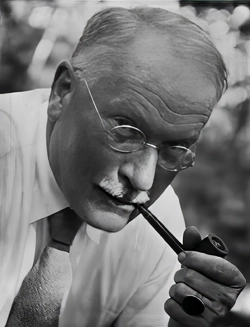 The Myers-Briggs Type Indicator® assessment has been used by millions of people globally for more than five decades—an unheard-of length of use and relevance for a personality assessment. The continued relevance is due, in large part, to the Jungian foundation of the MBTI system. Jungian psychology speaks directly to the heart and immediate experience of human beings, attending to our need for a soulful connection to ourselves, to others, and in the lives we lead. The nature of Jung's theory is rich, nuanced, and complex, and continues to be developed into new lines of thinking and application a century after it emerged in our culture and history.
Katharine Cook Briggs: The Beginning of Type
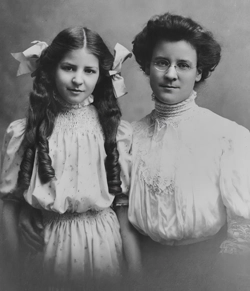 The most widely influential development of Jung's theory was done by Myers when she created the original MBTI assessment and theory in the 1950s and 60s. Isabel was influenced by her mother, Katharine Cook Briggs, who had already begun developing her own personality system when Jung's book, Psychological Types, was translated into English in 1923. Recognizing its value, Briggs studied and applied the theory, fostering in Myers the interest and drive to develop the MBTI assessment.
It is interesting to note that Katherine's thinking about personality had similarities to Jung's in that Katherine also understood people as types of people with particular and predictable ways of expressing themselves. For example, one of the types in Katherine's theory were the "Executives," easily recognizable in types with preferences for Thinking and Judging. Another type in Katherine's work was called "Sociable," whose style of outgoing emotional resonance, caring, and compassion aligned with Jung's description of types with a dominant preference for Extraverted Feeling.
Isabel Briggs Myers: The MBTI Instrument and Personality Type
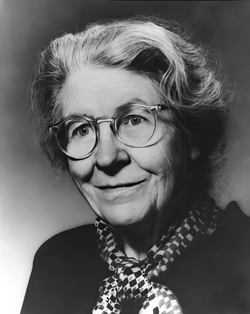 Myers worked for decades to ground Jung's theory and empirical, clinical insights of psychological types, into a quantitative assessment, eventually creating the Myers-Briggs Type Indicator instrument. Like Jung, Myers' work grew from personal experience and the avid observation of human nature. She built on Jung's work by systematically mapping how we can improve ourselves and grow into our potential using self-knowledge of our personality type.
As a psychoanalyst, Jung was concerned with helping people improve themselves and his work focused more on healing and the unconscious. Myers' work, on the other hand, is not about healing and the unconscious as much as it is about giving practical, clear, and useful guidance in seeing our gifts and challenges and using this knowledge to live a life closer to one's heart's desires. Myers was a pioneer in the field of type who extended Jung's work with her own original theories.
Center for Applications of Psychological Type
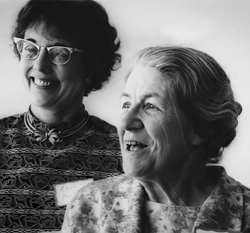 In 1975, Myers and Mary McCaulley, Ph.D., a tenured professor of psychology at the University of Florida, opened the Center for Applications of Psychological Type (CAPT®) in Gainesville, Florida with a vision to foster human understanding through training, publishing, and research. Myers died in 1980 and for several decades, McCaulley led CAPT and the growing field of type enthusiasts, practitioners, and researchers, as it grew into a global phenomenon. CAPT was home to a dedicated, passionate staff of type enthusiasts who carried the flame of Myers' work forward.
McCaulley was an instrumental figure in the reach and rigor of psychological type: she led the research that produced the Atlas of Type catalogs, created the Selection Ratio Type Table (SRTT) to represent type distribution in groups, was part of the team that produced the first computerized scoring protocol for the MBTI instrument, and collaborated with Myers on the initial work that would years later become the Step III™ instrument. If not for McCaulley, MBTI personality type would not have the depth of legacy that it enjoys today.
Myers & Briggs Foundation
Today, Myers & Briggs Foundation holds and builds on the legacy of Jung, Briggs, Myers, McCaulley, and CAPT through research, education, and community. We stand for the value of the individual, like our founders, and the passion that began the MBTI personality type journey. We bravely move into the future to challenge, extend, and evolve the MBTI system and type theory for the betterment of all, one person at a time.